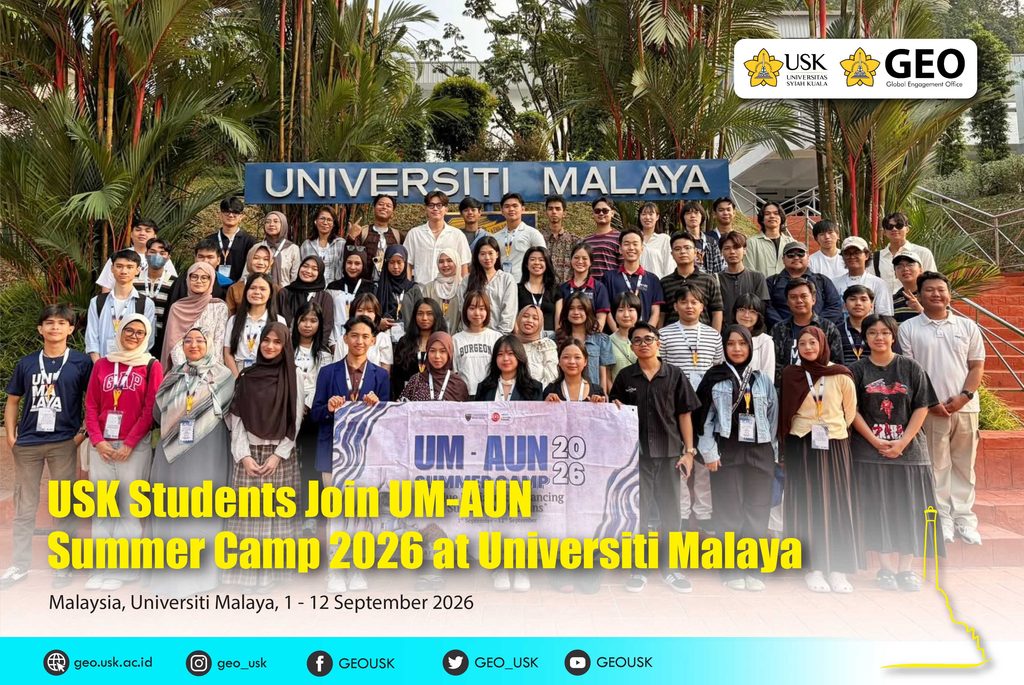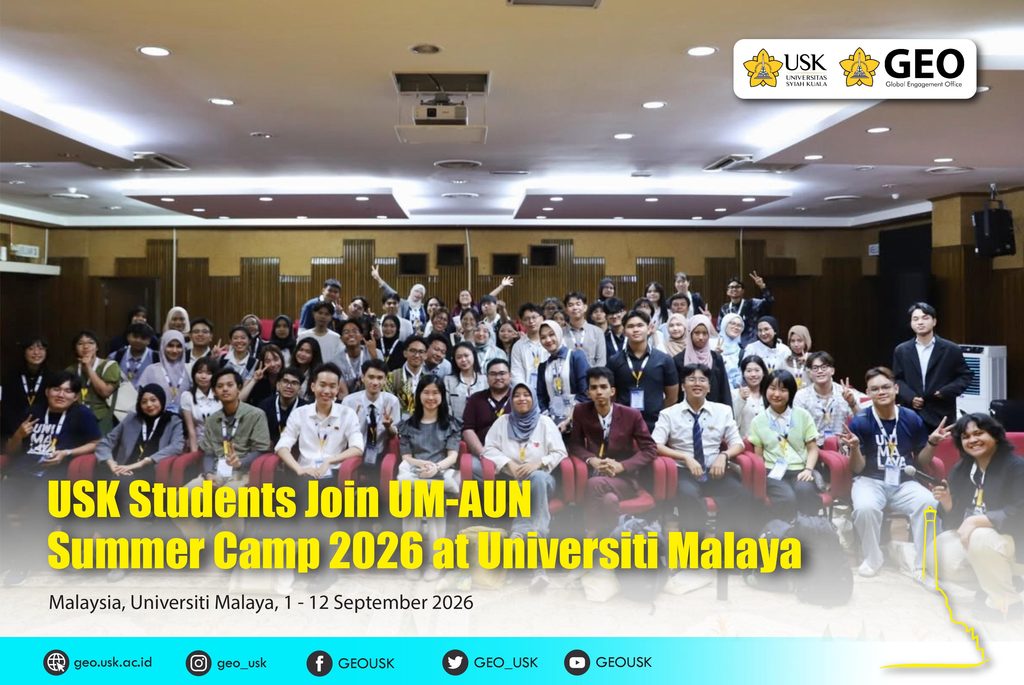
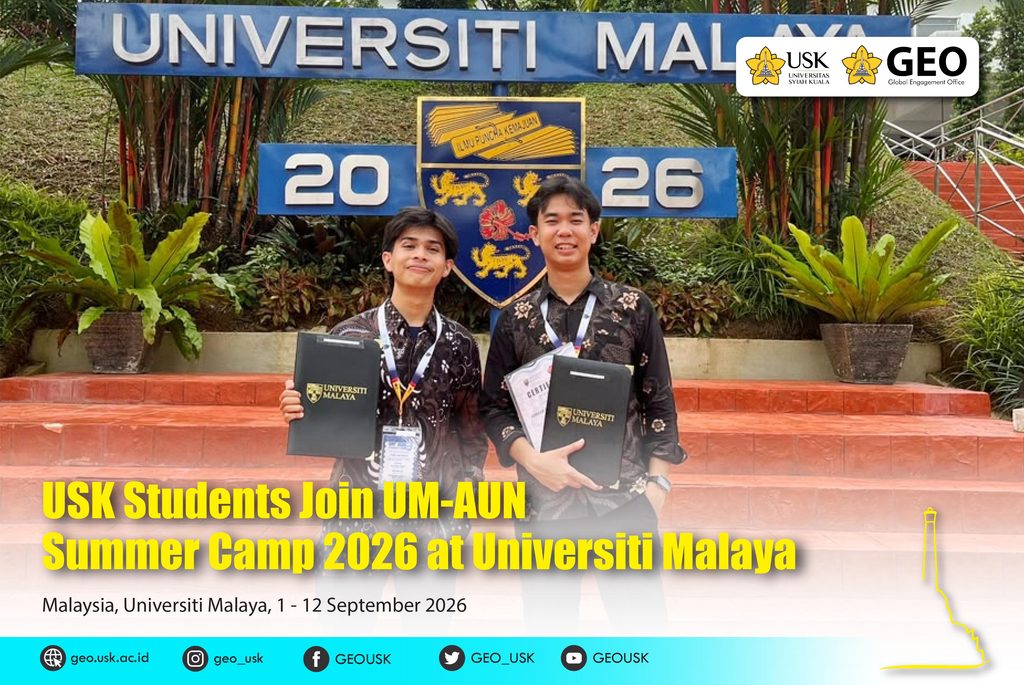
Two students from Universitas Syiah Kuala (USK), Ammar Faqih Zulkarnain from the Faculty of Agriculture, Agribusiness Study Program, and Teuku Ghalib Alpasha from the Faculty of Engineering, Industrial Engineering Study Program, participated in the UM-AUN Summer Camp 2026, themed “Blue Horizon: Advancing Sustainable Oceans,” held at Universiti Malaya (UM), Malaysia, from 1 to 12 September 2026.
The 12-day program brought together 60 selected students from several countries, including Malaysia, Indonesia, Cambodia, Myanmar, Thailand, Japan, China, Libya, Brunei, and Vietnam. The program was designed to broaden students’ perspectives on ocean sustainability through a combination of academic learning, interdisciplinary discussions, cultural exchange, and field activities.
During the program, Ammar and Ghalib attended academic sessions led by lecturers and researchers from Universiti Malaya and took part in a field study in Port Dickson, Negeri Sembilan. The field activities provided participants with firsthand insights into conservation research and strategies for maintaining the sustainability of marine ecosystems.
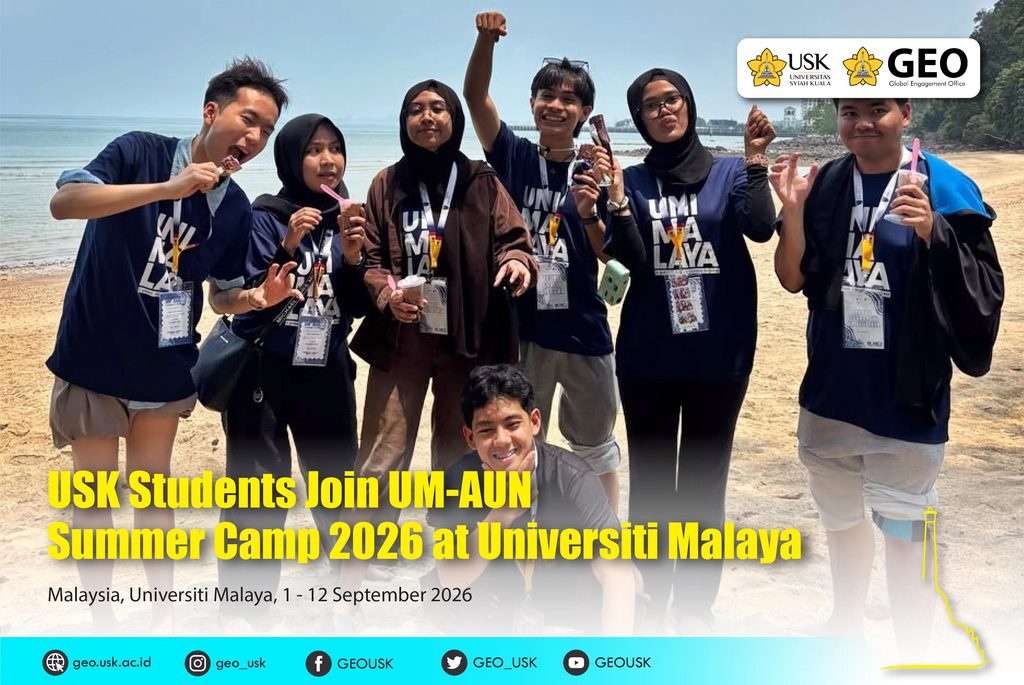
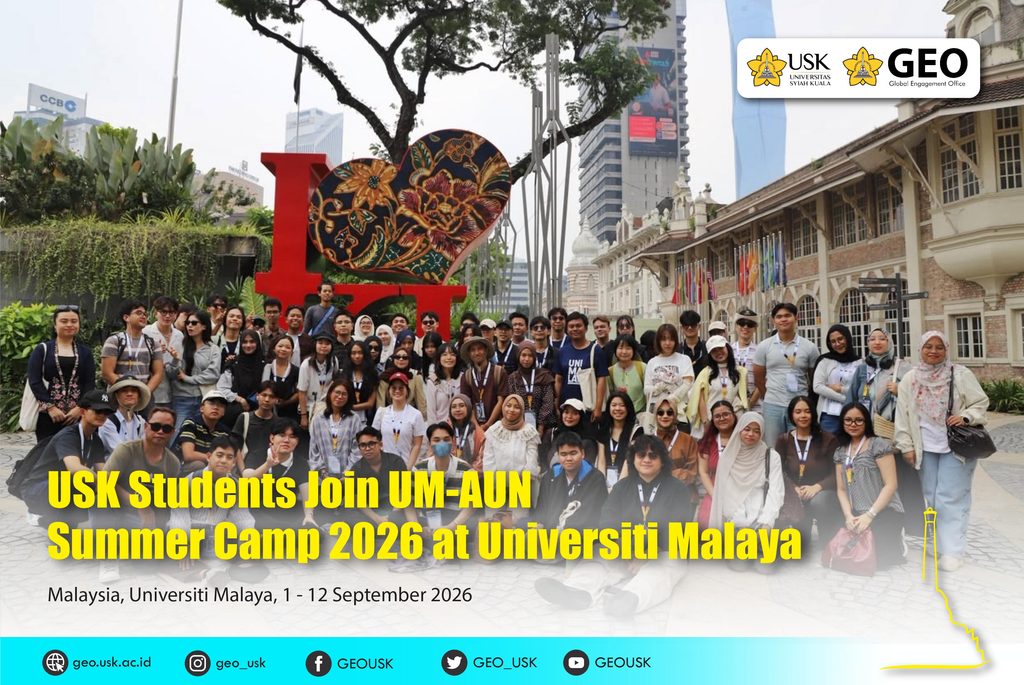
According to Ammar and Ghalib, their motivation to join the program was driven by their interest in expanding their academic perspectives while engaging in regional cultural exchange. As students from Banda Aceh, a region closely connected to coastal and maritime environments, they found the program’s focus on ocean sustainability highly relevant to both their backgrounds and academic disciplines.
From an Agribusiness perspective, Ammar explored the relevance of the blue economy to supply chain resilience and sustainable economic governance. Meanwhile, Ghalib approached the issue from an Industrial Engineering perspective, focusing on process efficiency, circular system optimization, and waste management in the maritime sector.
One of the most memorable experiences for both students was the final project, which brought together participants from diverse academic backgrounds. The students were challenged to develop practical strategies for promoting sustainable marine tourism in Malaysia.
The collaborative project combined different academic perspectives to develop ideas that addressed not only environmental concerns but also the economic value and long-term sustainability of marine tourism. The experience highlighted the importance of interdisciplinary and international collaboration in addressing challenges related to coastal and marine management.
“The collaborative atmosphere throughout the program was one of the most memorable aspects. We had the opportunity to exchange perspectives with students from different countries and learn how various regions address challenges related to coastal and marine management,” Ammar and Ghalib said.
Interactions with students and lecturers from Universiti Malaya were also described as dynamic, inclusive, and supportive. Beyond the academic sessions, participants exchanged stories about their respective cultures and experiences in managing coastal areas. UM lecturers and researchers also provided guidance, challenged the participants to validate their ideas, and encouraged them to view Southeast Asia’s marine challenges from a broader global perspective.
The experience also inspired ideas that Ammar and Ghalib hope to bring back to USK. Among them is the importance of strengthening interdisciplinary collaboration, particularly among the fields of agriculture, engineering, and marine sciences, to address coastal environmental challenges in Aceh.
Moving forward, they hope to contribute to initiatives promoting the circular economy, low-waste processing of marine products, and greater student awareness and participation in research and practical actions to support the sustainability of local marine ecosystems.
Their participation in the UM-AUN Summer Camp 2026 represents an opportunity for USK students to expand their international academic experience and networks while gaining a deeper understanding of sustainability issues relevant to Aceh and the Southeast Asian region.
The program also contributed to SDG 4 (Quality Education), SDG 12 (Responsible Consumption and Production), SDG 14 (Life Below Water), and SDG 17 (Partnerships for the Goals) through international learning, the promotion of circular economy principles, greater awareness of marine ecosystem sustainability, and cross-border and interdisciplinary collaboration.