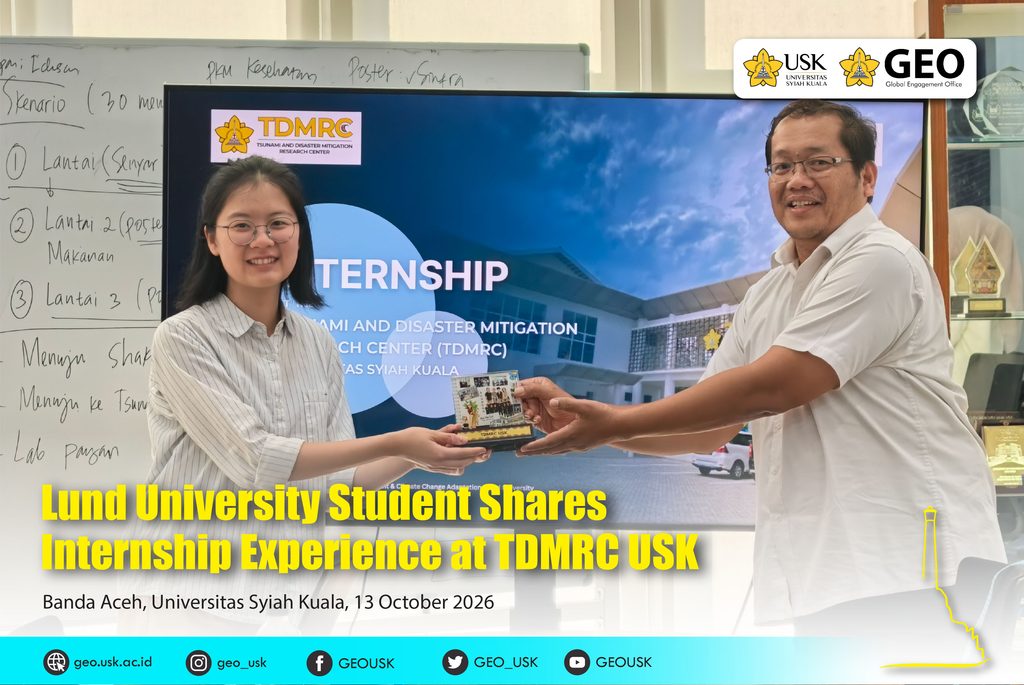
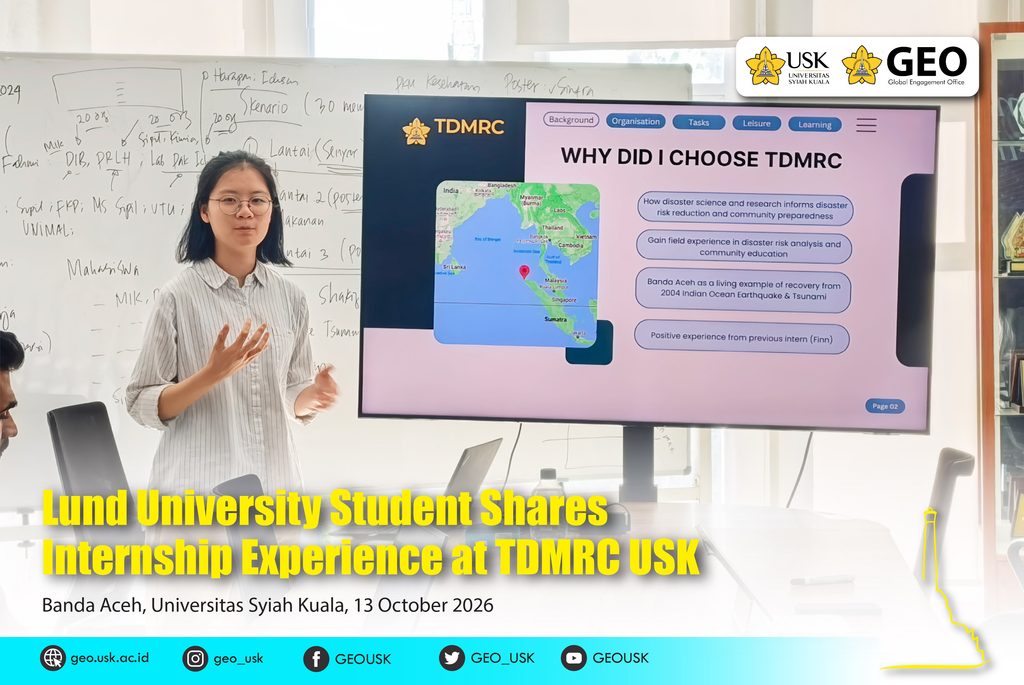
Kei Yiu Lai, a master’s student in Disaster Risk Management and Climate Change Adaptation at Lund University, Sweden, shared her experiences and key learnings from her internship at the Tsunami and Disaster Mitigation Research Center (TDMRC), Universitas Syiah Kuala (USK), on 13 October 2026.
During her presentation, Kei reflected on her academic and professional journey at TDMRC under the supervision of Prof. Dr. Syamsidik, S.T., M.Sc. She also shared her experiences participating in study visits to several areas in Aceh and engaging with various stakeholders involved in disaster risk reduction efforts.
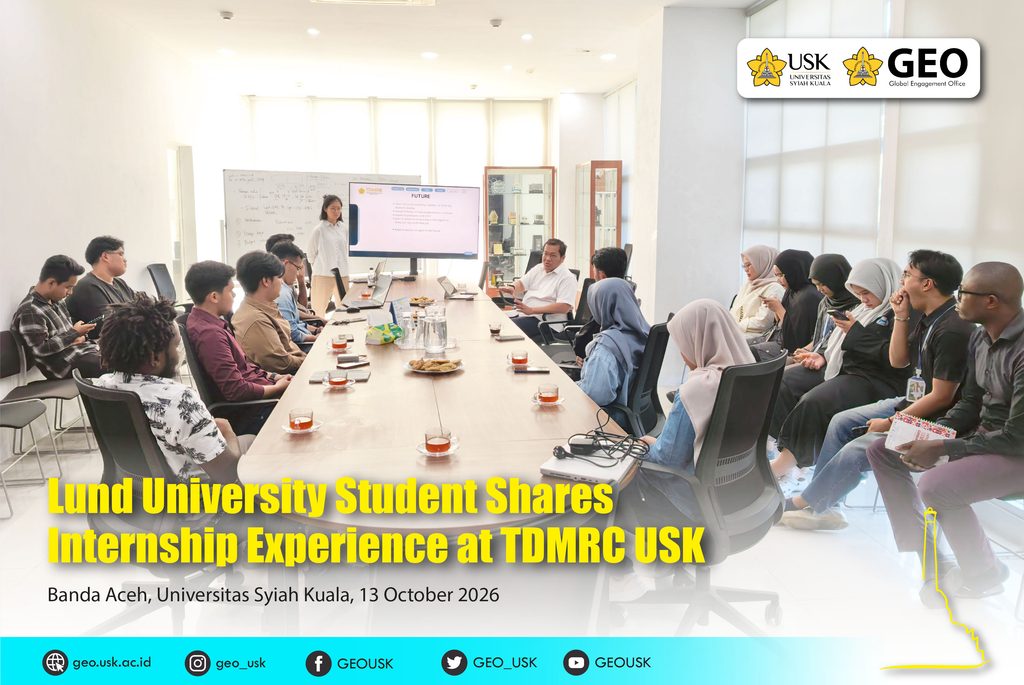
Originally from Hong Kong, Kei graduated with a bachelor’s degree in Atmospheric Science from The Chinese University of Hong Kong in 2024. She chose TDMRC for her internship because its vision and mission aligned with her interests, particularly in applying scientific research to support disaster risk reduction and strengthen community resilience.
Her decision was also inspired by a senior colleague, Finn, who had previously completed an internship at TDMRC. Hearing about Finn’s experience encouraged Kei to explore further how scientific knowledge can be applied to disaster risk management.
Throughout her internship, Kei contributed to several research activities and supported various TDMRC programs. One of her main assignments involved conducting Geographic Information System (GIS)-based building analysis in Banda Aceh by integrating building data with tsunami inundation data. The analysis aimed to estimate the potential impacts and losses that buildings could experience in the event of a tsunami.
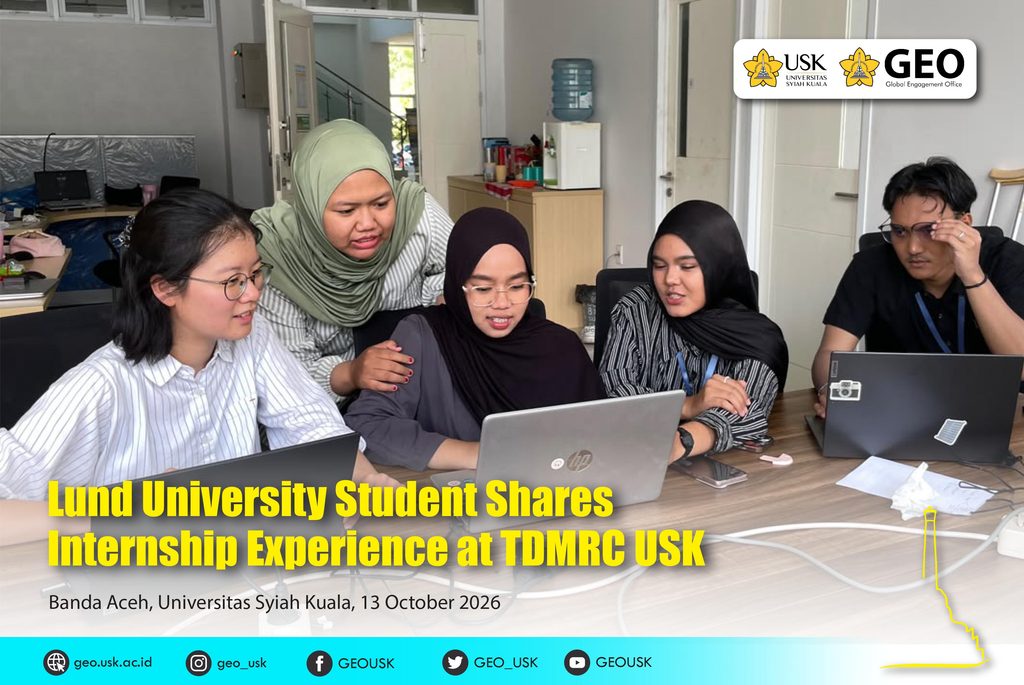
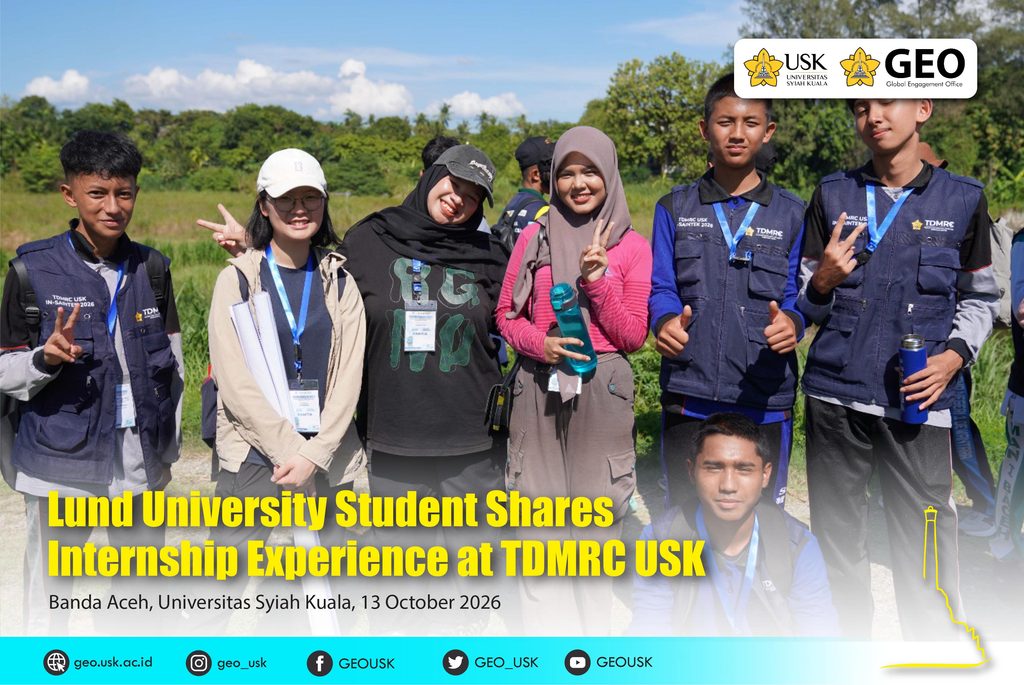
In addition, Kei helped document post-Cyclone Senyar recovery efforts by reviewing government reports and data. She also participated in various TDMRC activities, including the Disaster Science Camp, seminars, and training sessions, and had the opportunity to serve as a judge in the UDARE competition.
These experiences allowed Kei to strengthen her technical skills, particularly in GIS applications and probabilistic tsunami hazard analysis. Studying tsunami hazards was a new learning experience for her, as she had previously had limited exposure to this area of research.
Beyond technical competencies, Kei also developed important interpersonal skills, including adapting to a new working environment, communicating across cultures, and building professional relationships based on trust and collaboration.
However, language differences and variations in workplace culture presented some challenges during her internship. Some of the documents she needed to review were written in Indonesian, which was also used as the language of instruction in several seminars and training sessions. To overcome these challenges, Kei used Google Translate, sought assistance from colleagues, and applied keyword-search strategies to identify relevant information in Indonesian-language reports more efficiently.
For Kei, the internship at TDMRC provided more than an opportunity to expand her academic knowledge. It also offered firsthand insight into the practical application of scientific research in disaster management. Interactions with researchers and practitioners, along with study visits to several areas in Aceh, further broadened her understanding of disaster-related challenges and efforts to build community resilience.
Through this internship, TDMRC USK serves as a learning environment where international students can connect academic theories with practical research and disaster management activities. Kei’s experience also highlights the importance of international collaboration in facilitating knowledge exchange, strengthening academic capacity, and advancing more effective disaster risk reduction efforts.
The internship also supports several United Nations Sustainable Development Goals (SDGs), particularly SDG 4 (Quality Education) through learning and capacity development; SDG 11 (Sustainable Cities and Communities) through tsunami risk analysis in Banda Aceh; and SDG 13 (Climate Action) through disaster risk studies and documentation of post-Cyclone Senyar recovery efforts.
Beyond her academic and professional activities, Kei also had the opportunity to explore Aceh and experience its local culture, traditions, and hospitality. These experiences allowed her to gain a deeper appreciation of the region and its people, making her internship not only a valuable learning opportunity but also a meaningful cultural experience.